
Overview
Project overview.
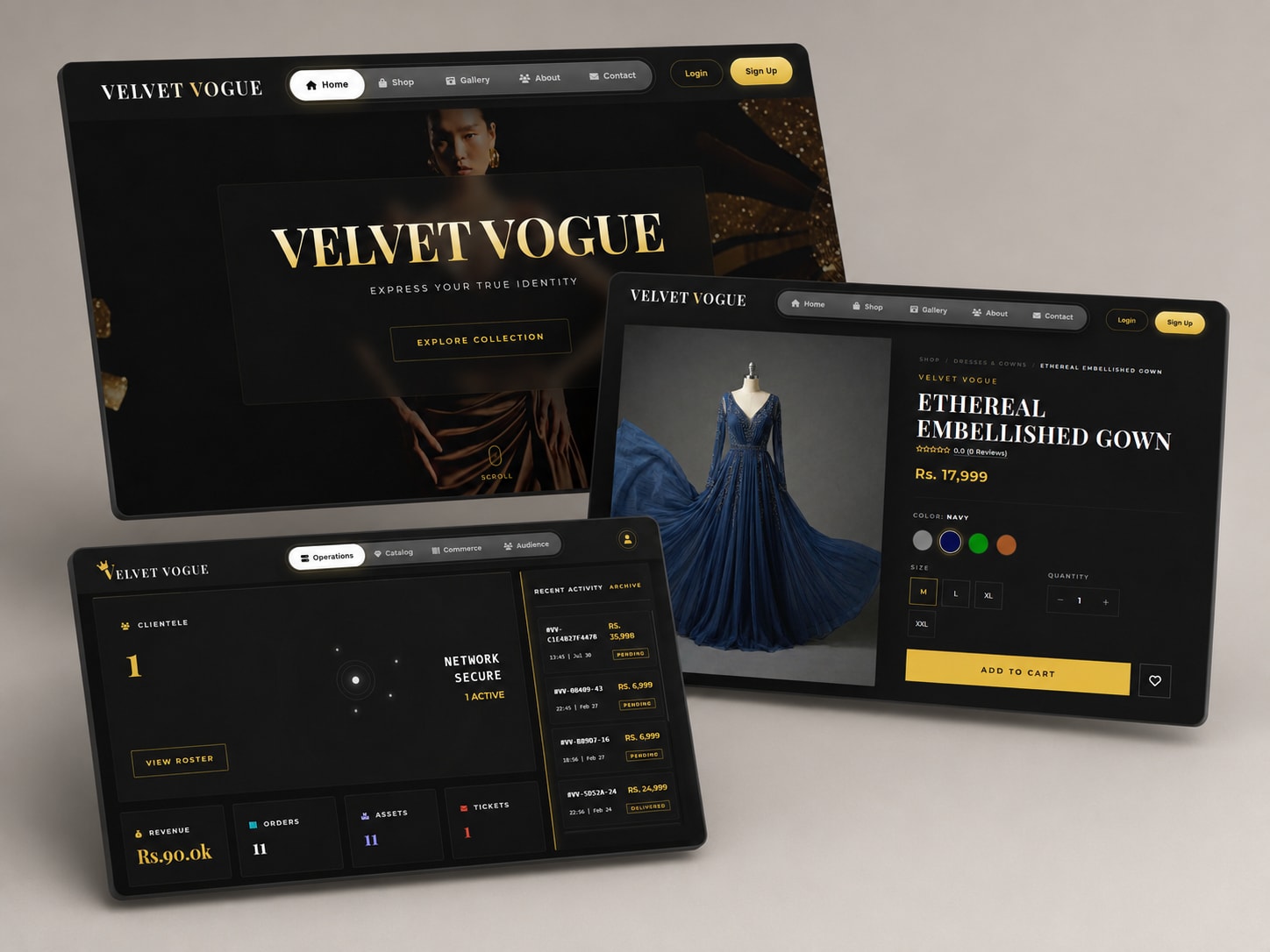
Velvet Vogue is a PHP and MySQL fashion store connecting product discovery, variant-aware shopping, orders, inventory and administration in one system.
Problem
One retail workflow, split across too many moving parts.
Velvet Vogue was built for a fashion retailer needing both a customer storefront and an independent management system. Customers needed clear discovery and ordering, while administrators needed reliable control over products, variants, stock and order progress.
The difficult part was keeping related data trustworthy. One product could contain several sizes, colours, stock values and images, so a failed upload or invalid variant needed to leave no incomplete records behind.
Discovery
Start with what shoppers and administrators actually need.
Questionnaire feedback made discovery speed a priority: shoppers wanted to combine size, colour and price criteria without repeatedly opening separate pages.
Early structure
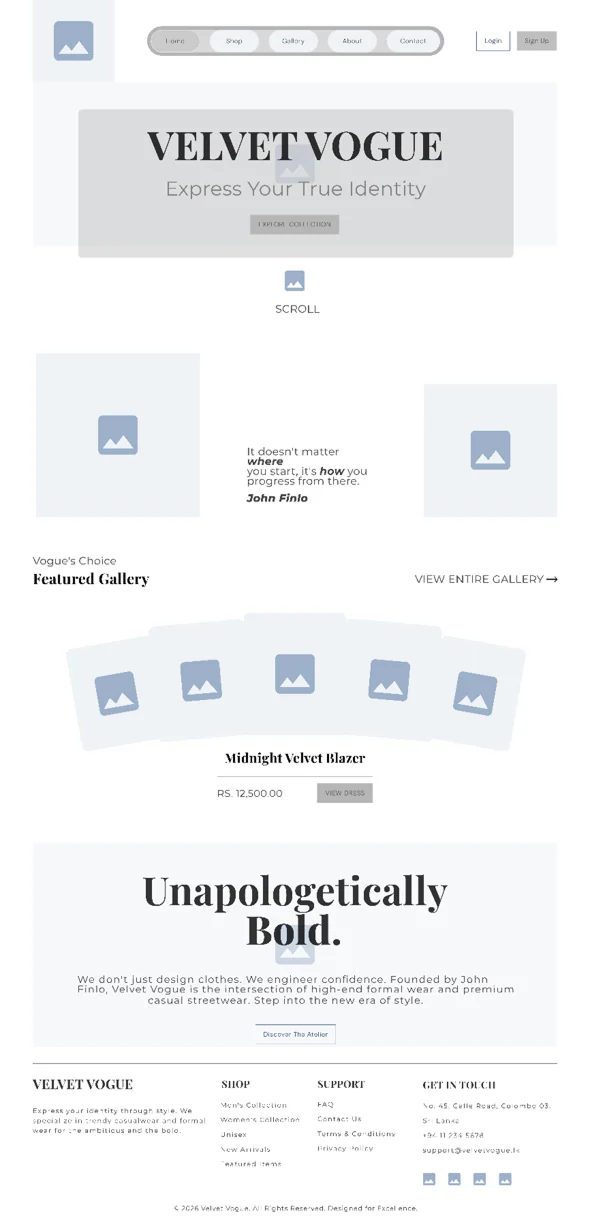
The wireframe established the page hierarchy, shopping entry points and content order before visual styling.

Final homepage
The completed page turns the same structure into a branded storefront with catalogue, editorial and trust-building sections.
Key decisions
Design the experience, then protect the data behind it.
The strongest decisions improved catalogue discovery, treated variants as real inventory and made product creation recover safely from failure.
Combined filters instead of isolated searches
ChallengeA user might know the size, colour and price range they want, but separate controls force repeated searches.
DecisionI implemented multi-criteria filtering so several attributes can work together in one catalogue view.
Why it mattersIt shortens discovery and mirrors how people actually describe clothing: not one attribute at a time, but a combination.
Variants as first-class inventory
ChallengeA product-level stock number cannot explain that a black medium is available while a blue medium is sold out.
DecisionEach size and colour combination receives its own SKU, stock count and optional price adjustment.
Why it mattersVariant-level records make availability and ordering precise instead of treating every product as one undifferentiated item.
All-or-nothing product creation
ChallengeThe product, variants and images are written in separate steps. Failure in the middle could leave orphaned data or files.
DecisionI used database transactions, server-side validation, rollback and uploaded-file cleanup as one controlled workflow.
Why it mattersThe admin either gets a complete product or a clean failure. Partial success is not acceptable for inventory data.
Multi-criteria filtering lets shoppers combine attributes instead of restarting the search.
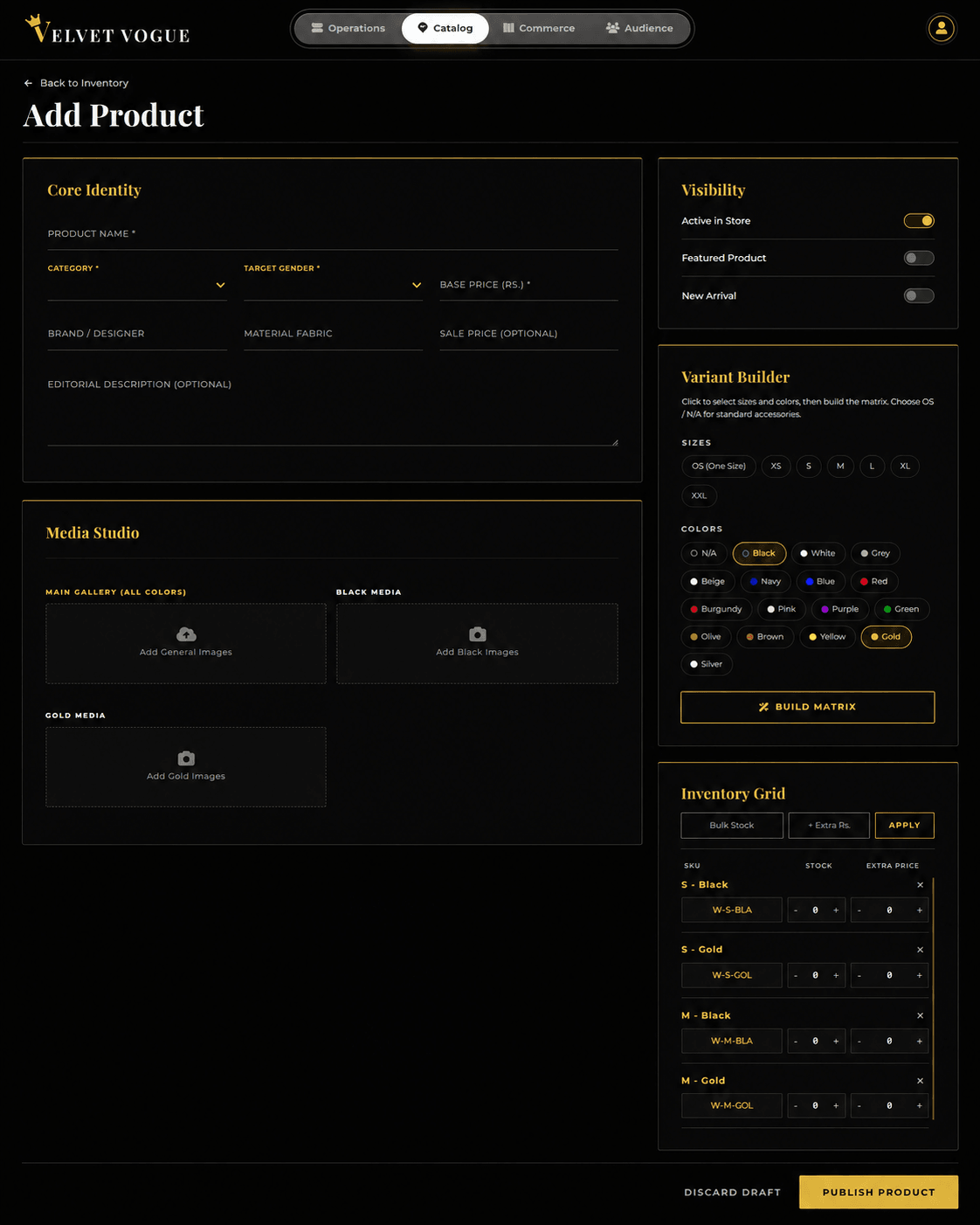
One controlled product-creation workflow
The interface brings product details, media, visibility and the generated size-colour inventory matrix into one deliberate operation.
- Server-side validation protects every submitted field
- Variants receive individual stock and SKU records
- Transactions and cleanup prevent partial products
Final solution
A complete retail loop, not a collection of disconnected screens.
Customer and administrator actions now share the same product, inventory and order data from listing through delivery.
Fast product discovery
Search, categories and combined filters help customers narrow products by the attributes that matter.
Variant-aware shopping
Product pages expose size, colour, stock and pricing choices before an item reaches the cart.
Customer order journey
Accounts, cart, checkout, invoices and tracking provide a clear path after product discovery.
Operational admin tools
Products, variants, inventory, customers, orders, reviews and enquiries are managed from one dashboard.
- 01
Admin creates product
- 02
Variants receive stock
- 03
Customer select product
- 04
Add to cart or checkout
- 05
Customer tracks progress
Keyboard controls: Space or K plays and pauses. Left and right arrow keys move five seconds. Home and End move to the beginning and end. F toggles fullscreen.
Video pausedProduct details connect visual merchandising with colour, size, price and stock choices.
The dashboard turns the same store data into operational information for administrators.
Order tracking closes the loop after checkout instead of leaving the customer without status information.
A horizontal editorial gallery adds brand character without interrupting the shopping flow.
Even the error state becomes a small brand moment through a coupon-dropping mini game.
Outcome
A deployed retail platform connecting customer and administrator workflows.
The application was completed, functionally tested and deployed online. Its strongest result is the end-to-end retail workflow and the reliability built around product creation.
Live deployed customer-facing website
Twelve-table relational data model
Validated submissions supporting up to 100 variants and 20 images
Customer and administrator flows tested across the main tasks
The biggest lesson: backend reliability is part of the user experience.
The strongest part of the project is the connection between a custom visual experience and a structured operational backend. Product discovery, inventory and administration operate as one connected workflow.
- Model product variants before designing their interface
- Treat uploads and database writes as one recovery problem
- Use feedback to simplify discovery rather than add decoration
ETCP
A 50-screen React frontend where traveller and provider journeys evolved through research, sketches and usability feedback.